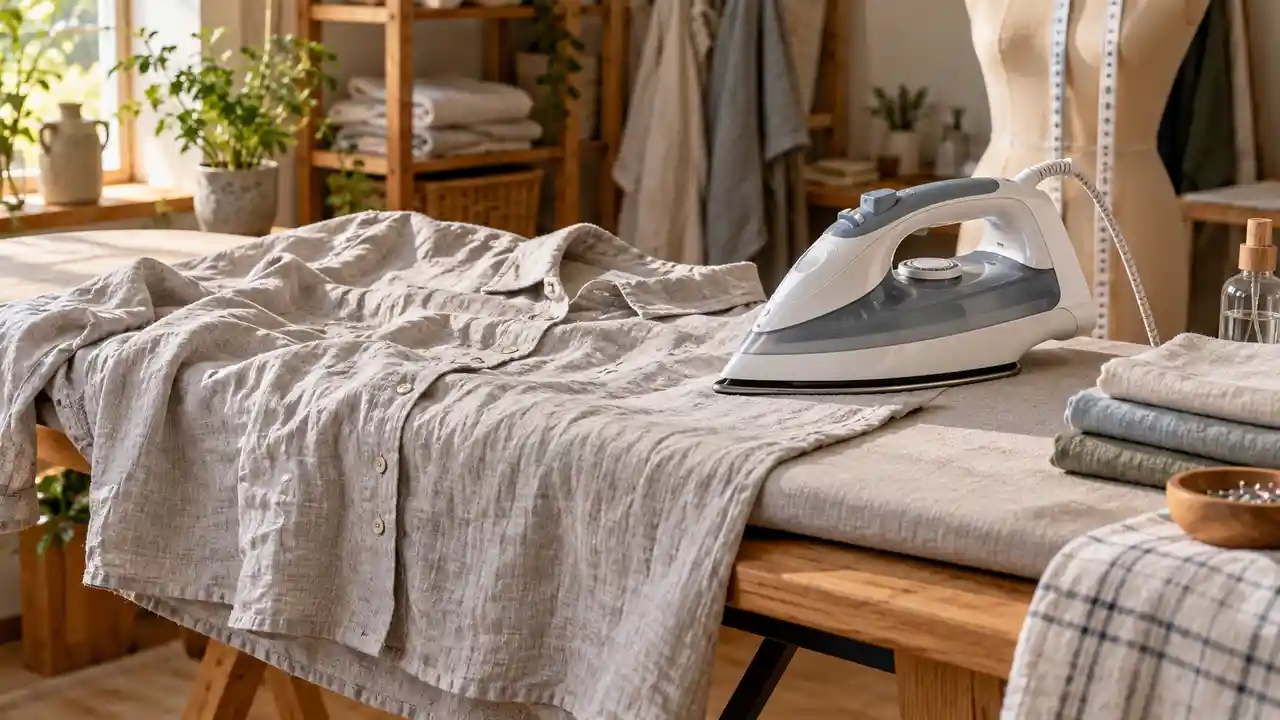
Linen rewards careful pressing, but it can also make a mediocre iron feel frustrating fast. The fabric’s crisp texture and natural tendency to hold deep creases call for dependable heat, useful steam, and a soleplate that can move across broad panels without snagging. A good iron for linen should also give you enough control to switch between a heavyweight linen shirt, a lighter blouse, and garments blended with cotton or synthetic fibers.
Many buyers focus on wattage alone, yet that number does not tell the whole story. Steam distribution, temperature controls, anti-drip protection, soleplate shape, water management, and the way the iron handles collars and seams all matter. Linen often responds well to moisture and heat, but the care label still sets the boundaries, especially for linen blends, dyed fabric, embroidery, and garments with delicate trims.
The products below include full-size steam irons, a cordless option, and models with fabric presets or dry-ironing controls. Different buyers will value different details. Someone pressing linen bedding may prefer broad steam coverage, while someone caring for a few work shirts may want a compact iron with simple controls. The comparison starts with the strongest overall matches, then moves through more specialized choices.
Quick Answer
The BEAUTURAL 1800 Watts Steam Iron is the strongest overall match for linen because it combines a linen preset, a digital display, a ceramic-coated soleplate, spray mist, steam bursts, and automatic shutoff. Its controls are especially useful for buyers who regularly switch between fabric types.
The Rowenta Focus Excel DW5280 is a strong alternative for shoppers who prioritize steam distribution and maintenance features. Its 400-plus active holes, variable steam settings, precision tip, self-cleaning function, and anti-calc system suit larger or more demanding pressing sessions. For cord-free handling, the Panasonic NI-WL700A offers a different approach, although its short steam cycle between reheats makes it better suited to controlled batches than uninterrupted heavy ironing.
Best Iron for Linen Comparison Table
| Product | Best For | Soleplate & Controls | Steam Features |
|---|---|---|---|
| BEAUTURAL 1800 Watts Steam Iron | Best Overall | Double-layer ceramic coating, 9 presets, LCD | Spray mist, steam burst, anti-drip, anti-calc |
| Rowenta Focus Excel DW5280 | Steam distribution | Precision tip, variable controls | 400+ holes, 35 g/min continuous, 135 g/min boost |
| BLACK+DECKER Allure Professional | Separate steam and temperature control | Stainless steel, precision tip | Dynamic steam, vertical steam, auto-clean |
| PurSteam SteamBurst+ | Preset linen mode | Ceramic soleplate, fabric presets | Adjustable steam, burst, vertical steaming |
| Rowenta DW2360 | Large garments | Stainless steel, precision tip | 300 micro-holes, 180 g/min shot |
| Rowenta Focus Excellence DW5433 | Organized storage and digital control | Stainless steel, LED presets | 400+ holes, 180 g/min boost, anti-drip |
| BLACK+DECKER The Classic | Steam or dry ironing | Aluminum nonstick surface, 7 settings | Steam, spray, anti-drip |
| BLACK+DECKER Vitessa | Simple everyday pressing | TrueGlide nonstick, SmartSteam | Automatic steam adjustment, vertical steam |
| Panasonic NI-WL700A | Cordless handling | 360-degree stainless steel soleplate | Steam and dry modes, vertical steam |
The detailed reviews explain how each iron approaches linen pressing, including the practical trade-offs behind its controls, steam system, and handling.
1. BEAUTURAL 1800 Watts Steam Iron with Digital LCD Screen — Best Overall
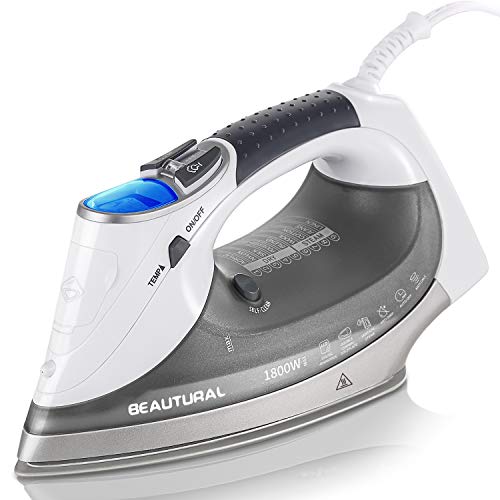
Linen benefits from an iron that makes fabric selection easy without taking away manual control, and the BEAUTURAL is built around that idea. Its LCD screen presents nine preset modes, including linen, cotton, wool, silk, nylon, and jeans. That arrangement is more approachable than guessing at a vague dial position when a laundry pile contains several different fabrics. The setting still needs to be checked against each garment’s care label, but the labeled interface gives the user a clear starting point.
The double-layer ceramic-coated soleplate, water spray, burst of steam, anti-drip design, and anti-calc feature give this model a broad set of linen-friendly tools. A linen tablecloth with stubborn fold lines may benefit from spray moisture before pressing, while a linen shirt can be handled with a lower, more controlled setting if its label calls for it. Automatic shutoff adds a practical safeguard, with the listed timing changing according to whether the iron is resting flat or upright.
Pros
- Nine fabric presets include a dedicated linen setting.
- LCD controls make fabric selection easier to read than a basic dial.
- Double-layer ceramic-coated soleplate is paired with spray and steam functions.
- Anti-drip and anti-calc features support routine steam ironing maintenance.
- Three-way automatic shutoff covers flat and upright resting positions.
Cons
- Digital controls may feel more involved than a simple mechanical temperature dial.
- The full-size feature set is more appliance than occasional touch-up users may need.
This is the best fit for households that press linen alongside several other fabric types and want visible guidance at the handle. It also suits buyers who prefer a full-featured corded iron with a dedicated linen mode rather than a minimalist dry iron. Someone who wants the simplest possible control scheme may prefer The Classic below, but the BEAUTURAL offers a more organized route through mixed-fabric laundry.
To buy this product, click here.
2. Rowenta Focus Excel Steam Iron DW5280 — Best for Steam Distribution

The Rowenta Focus Excel takes a steam-centered approach to linen. Its soleplate has more than 400 active holes, and the listed steam system provides continuous output up to 35 g/min with a boost reaching 135 g/min. Continuous steam and a short steam boost serve different jobs. The former can support steady work across a linen panel, while the latter is aimed at more concentrated creases and thicker areas.
Variable steam settings make this model more adaptable than an iron that simply delivers one fixed level. The precision tip can help around buttons, narrow seams, and collars, where linen shirts often develop sharp wrinkles. Self-cleaning and anti-calc features also matter for an iron intended for regular steam use. They do not remove the need to follow the appliance’s maintenance instructions, yet they give the owner dedicated tools for handling mineral buildup.
Pros
- More than 400 active holes support broad steam distribution.
- Continuous steam output is listed up to 35 g/min.
- Steam boost reaches 135 g/min for concentrated crease work.
- Variable steam controls suit different fabric and pressing situations.
- Precision tip, self-cleaning, anti-calc, anti-drip, and auto-off features add practical versatility.
Cons
- Steam-focused controls may be more than occasional linen touch-ups require.
- Its feature set places more emphasis on maintenance and setup than a dry iron.
Choose this Rowenta when steam coverage is the main reason you are replacing an iron. It is particularly appealing for linen garments with broad wrinkled sections, provided you follow the care label and use the appropriate temperature and steam level. Buyers who mainly press a few collars or hems may find a simpler model easier to live with, but larger fabric areas give the Focus Excel a persuasive role.
To buy this product, click here.
3. BLACK+DECKER Allure Professional Steam Iron — Best for Independent Steam Control
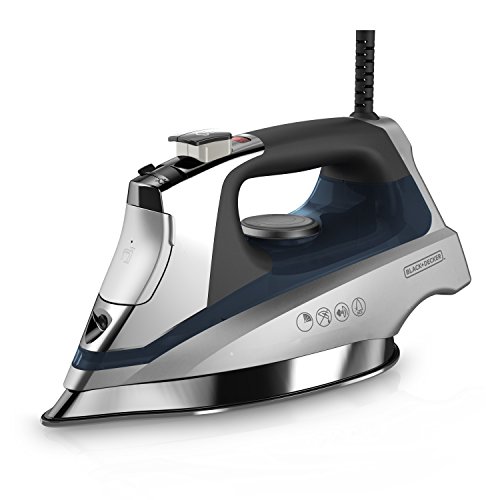
The Allure Professional is a sensible choice for people who want to adjust heat and steam separately. Linen does not always arrive in the same form. A heavy linen napkin, a lightweight shirt, and a linen-rayon blend may call for different handling, so separate controls let the user adapt the steam without treating temperature and moisture as one inseparable setting.
A stainless steel soleplate, precision tip, vertical steam function, and auto-clean system round out the design. The precision tip is useful around shirt plackets and close-set buttons, while vertical steaming can handle quick touch-ups on hanging items when a full ironing-board session would feel excessive. The listing also recommends fully preheating the iron and using clean tap water for best performance, making preparation part of the routine.
Pros
- Temperature and steam controls can be adjusted independently.
- Stainless steel soleplate is paired with a precision tip.
- Vertical steam function adds flexibility for hanging garments.
- Auto-clean system helps flush mineral deposits.
- Automatic shutoff operates after inactivity in flat and upright positions.
Cons
- Separate manual controls require more attention than automatic steam systems.
- Wiping the soleplate and avoiding zippers or buttons is part of maintaining its smooth surface.
The Allure is a strong match for experienced users who want to fine-tune the pressing process rather than rely on a single fabric program. It also makes sense for a mixed wardrobe where linen is only one part of the job. A beginner who wants a screen or clearly labeled presets may find the BEAUTURAL more immediately intuitive, while this model rewards hands-on adjustment.
To buy this product, click here.
4. PurSteam SteamBurst+ Steam Iron — Best for Preset Linen Pressing
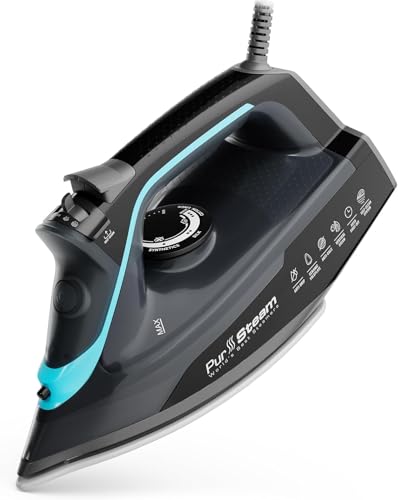
PurSteam gives linen a clearly defined place in its preset system. The listed modes group low heat for synthetics, medium heat for silk and wool, and high heat for cotton and linen. That layout is easy to understand when a user moves from a delicate blouse to a sturdy linen shirt. Presets are a starting point rather than a replacement for reading the garment label, but they can reduce the fiddling that often slows down a mixed load.
The iron also works as a handheld steamer, with adjustable steam, a spray button, a burst function, and vertical steaming for curtains or hanging clothing. A self-cleaning function, anti-calc feature, and anti-drip system give it a useful maintenance package. The product information describes rapid heating in about 30 seconds, though the actual ironing result still depends on garment construction, moisture, temperature, and technique.
Pros
- Preset modes include a high setting for cotton and linen.
- Adjustable steam, spray, and burst functions support different crease types.
- Vertical steaming adds a second way to handle hanging garments.
- Self-cleaning and anti-calc features support steam-system care.
- Three-way automatic shutoff covers horizontal, vertical, and tipped positions.
Cons
- The preset system is less granular than a model with numerous individual fabric choices.
- Vertical steaming and extra controls add features that occasional flat-ironing users may rarely use.
PurSteam suits buyers who want a straightforward fabric grouping with a dedicated linen category and useful steam flexibility. It is a practical middle ground between a basic dial iron and a display-heavy model. If you regularly switch between several closely related fabrics and want more precise labels, the BEAUTURAL’s nine presets may be a better fit.
To buy this product, click here.
5. Rowenta DW2360 Steam Iron — Best for Large Garments
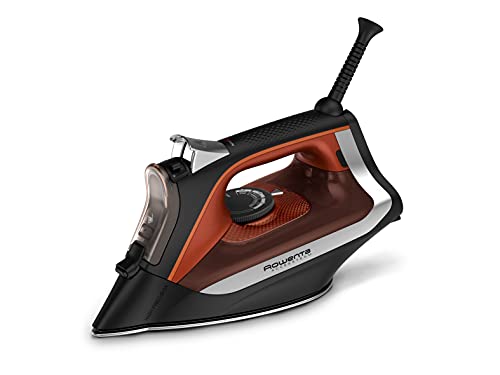
The DW2360 is aimed at buyers who want a capable everyday steam iron with a generous approach to crease removal. Its stainless steel soleplate uses 300 micro-holes for steam distribution, and the listed steam shot reaches 180 g/min. That shot is a burst specification, not a continuous steam figure, but it can be useful when a stubborn fold needs concentrated moisture and heat.
The precision tip gives the iron more control around collars, cuffs, and narrow sections of linen clothing. Its extra-large water tank is also positioned as a convenience feature for larger garments and longer sessions, while the ergonomic handle and automatic shutoff keep the basic operation familiar. The model is suitable for delicate and large garments according to its product information, but each linen item still needs its own care-label setting.
Pros
- Three hundred micro-holes distribute steam across the soleplate.
- Steam shot is listed at up to 180 g/min.
- Stainless steel soleplate and precision tip suit broad and detailed pressing.
- Extra-large water tank supports fewer interruptions during larger jobs.
- Automatic shutoff and ergonomic handle add everyday convenience.
Cons
- The strong emphasis on a steam shot does not describe continuous steam output.
- A larger water reservoir may be unnecessary for short touch-up sessions.
This Rowenta is a good choice for linen sheets, table linens, roomy shirts, and other pieces where repeated refilling would become irritating. Its precision tip keeps it from feeling clumsy around details, although buyers seeking digital fabric guidance may prefer one of the display-based irons. It offers a relatively direct control layout for someone who wants steam coverage without an elaborate interface.
To buy this product, click here.
6. Rowenta Focus Excellence DW5433 — Best for Organized Storage

The Focus Excellence DW5433 brings a more organized control system to a full-size steam iron. Its LED display offers five fabric presets, giving linen users a visible setting instead of relying entirely on a mechanical dial. The stainless steel Microsteam HD soleplate has more than 400 steam holes, and the listed steam boost reaches 180 g/min. Together, those details make the model a strong candidate for buyers who want broad steam distribution and digital guidance in one appliance.
The retractable 8-foot cord is the feature that changes daily storage most clearly. Pressing a button pulls the cord into the iron, which can be useful when the appliance lives in a cabinet rather than on a permanent ironing station. Anti-drip protection and automatic shutoff add routine convenience. The trade-off is that this is a feature-rich iron intended for users who appreciate organized storage and digital controls, rather than someone looking for the fewest possible moving parts or settings.
Pros
- LED display provides five fabric presets.
- Microsteam HD soleplate has more than 400 steam holes.
- Steam boost is listed at up to 180 g/min.
- Retractable 8-foot cord simplifies storage.
- Anti-drip protection and automatic shutoff support everyday use.
Cons
- Retractable-cord storage requires a little more operating hardware than a fixed-cord design.
- Five presets offer less fabric-specific guidance than the BEAUTURAL’s nine modes.
Pick this Rowenta if a tidy cupboard and clear digital controls matter as much as linen pressing. It is especially appealing in a home where the iron must be packed away after each use. Buyers who keep an iron permanently beside the board may gain more from the Focus Excel’s variable steam system or the DW2360’s simpler approach.
To buy this product, click here.
7. BLACK+DECKER The Classic Iron F67E-T — Best for Steam or Dry Ironing

The Classic stands apart by keeping both steam and dry ironing available through a familiar control layout. Linen often benefits from moisture, but some garments or pressing tasks are better approached with the steam turned off. This model lets the user make that choice directly, and its fabric guide covers linen, cotton, blends, wool, rayon, polyester, silk, nylon, acetate, and acrylic.
Its aluminum soleplate has a smooth nonstick finish and a groove near the tip for working around buttons and collars. Seven temperature settings provide a broad adjustment range without introducing a screen or a complicated menu. Anti-drip protection, a pivoting cord, a power indicator, and automatic shutoff keep the design practical. The result is an iron for people who want linen compatibility and manual control without a large collection of specialized features.
Pros
- Supports both steam and dry ironing.
- Fabric guide explicitly includes linen and several common blends.
- Seven temperature settings offer straightforward manual control.
- Tip groove helps navigate around buttons and collars.
- Anti-drip design, pivoting cord, power indicator, and automatic shutoff add practical support.
Cons
- Its mechanical controls provide less visual guidance than digital preset models.
- The feature set is more basic for buyers who want vertical steaming or extensive steam controls.
The Classic makes sense for someone who presses linen occasionally and values a conventional iron that can switch between wet and dry work. It is also a reasonable option for pressing tasks where steam is intentionally avoided. Buyers handling large loads may prefer a model with more prominent steam coverage or a larger tank, while people who dislike digital interfaces may find this one refreshingly direct.
To buy this product, click here.
8. BLACK+DECKER Vitessa Advanced Steam Iron ICR2020 — Best for Simple Everyday Pressing
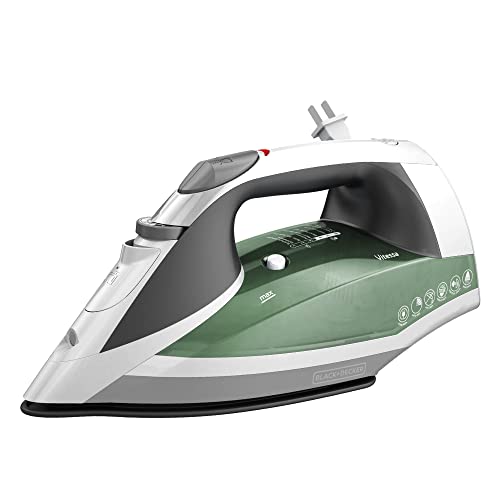
The Vitessa is aimed at buyers who want steam assistance without manually managing every burst. Its SmartSteam feature automatically adjusts the amount of steam based on the selected temperature, which can make routine pressing feel less fussy. The TrueGlide nonstick soleplate is intended for use across different fabrics, and vertical steaming is available for quick touch-ups on hanging clothing or curtains.
A retractable cord helps keep storage tidy, while automatic shutoff activates after the iron remains unattended in a flat or upright position. Linen users will still need to select an appropriate heat setting and follow the garment label, since automatic steam control does not remove the need for fabric awareness. Compared with the BEAUTURAL or PurSteam, this model provides less explicitly described linen-specific programming, but its simpler steam behavior can appeal to buyers who prefer a quieter control scheme.
Pros
- SmartSteam automatically adjusts steam according to selected temperature.
- TrueGlide nonstick soleplate is intended for a range of fabrics.
- Vertical steaming handles hanging garments and curtains.
- Retractable cord supports neater storage.
- Automatic shutoff covers flat and upright resting positions.
Cons
- It offers less fabric-specific display guidance than the models with dedicated presets.
- Buyers who want separate manual steam control may prefer the Allure Professional.
Vitessa is a good fit for everyday linen shirts, casual garments, and occasional household pressing where convenience matters more than a long list of controls. It is also useful for a user who wants to store the iron neatly after a quick session. For large linen panels or demanding crease work, the Rowenta models provide more explicitly documented steam-distribution features.
To buy this product, click here.
9. Panasonic NI-WL700A Cordless Steam/Dry Iron — Best Cordless Design

The Panasonic NI-WL700A changes the physical rhythm of ironing by removing the power cord from the hand. Its 360-degree Freestyle soleplate has a double-tipped shape intended for forward, backward, and side-to-side movement. That can be useful around linen shirt panels, seams, and corners where a cord often catches against the board or garment.
Cordless operation comes with a defined reheating routine. The product information states that the iron provides about one minute of steam ironing and five minutes of dry ironing per charge before it needs to return to its base. It heats to a high temperature in under two minutes, and the base also serves as part of the storage system with a heat-resistant carrying case. This makes the design convenient for controlled sections, though less suited to an uninterrupted pile of linen bedding.
Pros
- Cordless operation removes the power cord from the ironing path.
- 360-degree double-tipped soleplate supports multidirectional movement.
- Offers steam, dry, and vertical-steam functions.
- Listed heating time to high temperature is under two minutes.
- Heat-resistant carrying case supports storage and portability.
Cons
- Steam ironing time between reheats is listed at about one minute.
- Frequent returns to the base make it less convenient for large uninterrupted linen loads.
Choose the Panasonic for maneuverability, compact storage, and small or medium pressing batches where the docking rhythm is acceptable. It can feel especially convenient around narrow garment sections and crowded boards. Buyers who press tablecloths, sheets, or several linen garments in one uninterrupted session will likely prefer a corded model with a larger continuous steam focus.
To buy this product, click here.
Buying Guide
Choose Steam for Deep Linen Creases, Dry Ironing for Specific Tasks
Linen commonly responds well to moisture paired with heat, which is why spray mist, steam bursts, or continuous steam can be useful during pressing. Moisture can help relax a stubborn fold before the soleplate passes over it. Still, steam is not mandatory for every linen garment. The BLACK+DECKER Classic lets you switch between steam and dry modes, which may suit users who press linen blends or prefer a dry approach for particular garments.
Keep the garment’s care label in charge. Linen blends, dyed fabrics, decorative trims, and structured garments may have different instructions from plain linen yardage. A steam iron can support the process, but no setting guarantees that every linen item will tolerate the same heat or moisture.
Look for Controls That Match Your Fabric Habits
Fabric presets are useful if the iron moves between linen, cotton, wool, silk, and synthetics. The BEAUTURAL has nine presets with a dedicated linen mode, while the PurSteam groups linen with cotton in a high setting. The Rowenta Focus Excellence provides five presets through an LED display. These systems reduce guesswork, but they still require a quick check of the care label.
Manual controls have their own advantage. The Allure Professional separates temperature and steam adjustments, while The Classic uses a traditional fabric guide and temperature dial. Buyers who already understand their wardrobe may prefer direct controls over a digital screen.
Separate Steam Burst From Continuous Steam
A steam boost is a concentrated burst intended for a stubborn area. Continuous steam describes the ongoing output available while the iron moves across the garment. Those figures should not be treated as interchangeable. The Focus Excel lists continuous steam up to 35 g/min and a boost up to 135 g/min, while the DW2360 lists a steam shot up to 180 g/min.
For broad linen panels, steam distribution and continuous output may matter more than a single high burst number. For a deep crease near a cuff or fold, a burst can be useful. A comparison based on both characteristics gives a more realistic view than choosing the highest isolated figure.
Match Soleplate Design to the Work
Soleplate material is one part of the decision, not a complete performance guarantee. This roundup includes ceramic-coated, stainless steel, aluminum, and nonstick soleplate designs. A precision tip can help around buttons and narrow seams, while a broad arrangement of steam holes can support more even steam coverage across larger sections.
The Rowenta Focus Excel and Focus Excellence emphasize extensive hole patterns. The Classic uses a tip groove around buttons, and the Panasonic’s double-tipped soleplate is shaped for multidirectional movement. Think about the garments you press most often rather than assuming one material is automatically superior.
Consider Water and Maintenance Features
Steam irons require more care than dry irons because water and mineral deposits are part of the system. Anti-calc, self-cleaning, and auto-clean features appear on several models here. The BEAUTURAL includes anti-calc, the Focus Excel combines self-cleaning with anti-calc, and the Allure has an auto-clean system.
Follow the specific appliance instructions for filling, emptying, and cleaning. Water recommendations differ between models, so avoid adding fragrances or cleaning solutions unless the manufacturer specifically permits them. Anti-drip protection can help reduce water marks, but it does not replace proper temperature selection or routine maintenance.
Think About the Size of Your Linen Loads
A compact or cordless iron can be pleasant for a few shirts, collars, and hems. The Panasonic’s cordless design offers freedom of movement, but its listed steam cycle between reheats makes it less suitable for a long uninterrupted session. A full-size corded iron with a larger reservoir or stronger steam system is a better match for sheets, tablecloths, and several garments at once.
Storage also matters. The Rowenta Focus Excellence has a retractable cord, the Vitessa also uses a retractable cord, and the Panasonic includes a carrying case. Those details become valuable when the iron must return to a cupboard after every use.
Check Electrical Requirements Before Buying
The products in this roundup are intended for the United States. The BLACK+DECKER Easy Steam, which is not included among the final nine, is explicitly listed at 120 volts, while the selected models are presented as US-market appliances in the supplied product information. Do not assume that a US iron is dual-voltage or suitable for international travel simply because it is compact.
Use an appliance only within its documented electrical rating and confirm the product version before taking it outside the United States. A plug adapter changes the plug shape, not the voltage.
Best Iron for Linen FAQ
What type of iron is best for linen?
A full-size steam iron with adjustable temperature and useful steam control is usually the most practical type for linen. Steam can help with deep folds, while a fabric guide or preset can make it easier to select a suitable starting point. The BEAUTURAL, Rowenta Focus Excel, and PurSteam are especially relevant because their controls include linen or broader fabric settings.
Should linen be ironed with steam?
Steam can help relax wrinkles in many linen garments, but the care label should guide the temperature and moisture choice. A spray mist or steam burst can be useful for stubborn creases, while a dry setting may suit a particular blend or pressing task. The BLACK+DECKER Classic is useful for buyers who want both options.
Is higher wattage automatically better for linen?
No. Wattage describes electrical power consumption, but it does not by itself establish steam distribution, soleplate temperature accuracy, crease removal, or fabric safety. Look at the complete system, including temperature control, steam functions, soleplate design, water management, and the manufacturer’s fabric guidance.
What is the difference between steam burst and continuous steam?
Continuous steam is the output delivered during regular movement across the garment. A steam burst is a short, concentrated release for a particular crease or thicker area. A product can have a high burst figure without having the same continuous output, so compare those specifications separately.
Can I use a linen preset for every linen garment?
A linen preset is a convenient starting point, but it cannot account for every weave, blend, dye, finish, lining, or decorative detail. Read the garment care label first and test an inconspicuous area when the fabric or finish is unfamiliar. Linen-blend clothing may require a different setting from plain linen.
Is a ceramic soleplate better than stainless steel for linen?
Neither material is automatically best in every iron. The surrounding design matters, including the coating, soleplate shape, steam-hole arrangement, controls, and care instructions. Ceramic-coated models such as the BEAUTURAL and PurSteam offer one approach, while the Rowenta models use stainless steel with documented steam-hole designs.
How should I maintain a steam iron used for linen?
Follow the exact filling and cleaning instructions for the model. Use only the water type and cleaning process the manufacturer recommends, empty the reservoir as directed, and use self-cleaning or anti-calc functions according to the instructions. Keep the soleplate free from residue, and store the cooled iron safely after use.
Final Verdict
The BEAUTURAL 1800 Watts Steam Iron is the best overall choice for linen in this group because it combines a dedicated linen preset with nine fabric modes, an LCD screen, a ceramic-coated soleplate, spray mist, steam bursts, anti-drip protection, and anti-calc support. It gives mixed-fabric households a clear interface without abandoning the steam and moisture tools that linen often benefits from. The Rowenta Focus Excel DW5280 is the stronger alternative for buyers who place greater emphasis on steam distribution, variable steam control, and maintenance features.
Other choices make sense for different routines. The BLACK+DECKER Classic is appealing for steam-or-dry flexibility, the Allure Professional suits users who want independent temperature and steam controls, and the Panasonic NI-WL700A is the most distinctive option for cordless handling and compact storage. Match the iron to the size of your linen loads, the fabrics in your wardrobe, your tolerance for reheating or refilling, and the storage space near your ironing board. Most importantly, use the garment label as the final authority on heat and steam.
