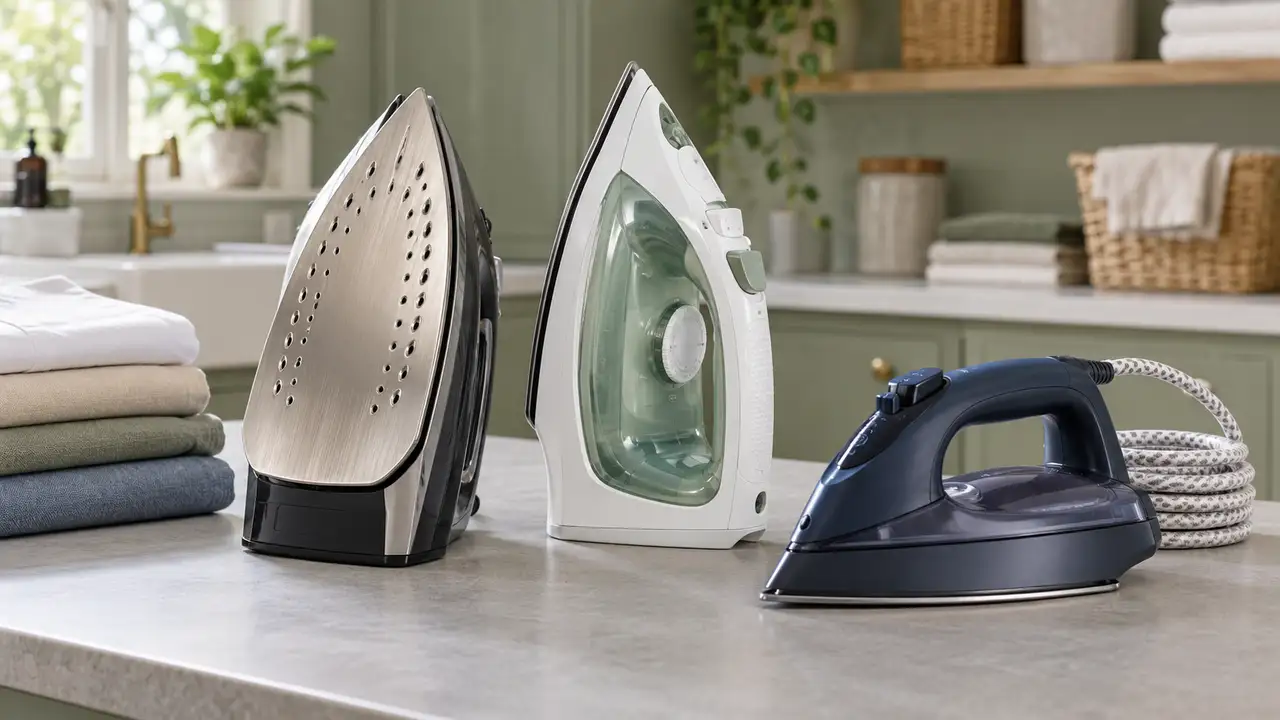
Choose a steam iron by matching its handling, controls, steam functions, and maintenance requirements to the clothes you actually press. Start with those needs, then set a budget. A long feature list is less useful than an iron you can lift comfortably, fill cleanly, and operate without repeatedly checking the controls.
For a defined spending limit, use these criteria alongside our comparisons of irons under $50 or irons under $100; confirm the current price before deciding.
Identify the Work Before Looking at Specifications
Write down a typical ironing session: perhaps two shirts, a week’s school clothes, or a stack of fabric pieces for sewing. Note whether you need sharp creases, work around buttons, or repeatedly lift the iron while repositioning small pieces. This gives you a better basis for selection than a general claim of professional performance.
Also identify the category you need. A conventional steam iron contains its water supply in the handheld appliance. A separate-tank system occupies more space and may suit longer sessions. A garment steamer handles hanging clothes differently. Do not compare their tank sizes and wattages as if they describe the same task.
Check Weight in the Condition You Will Use It
Dry weight is only part of the picture. A filled reservoir adds weight, and a cord can create drag. Consider how often you will lift the iron, how the handle sits in your hand, and whether the steam controls require an awkward reach.
More weight is not automatically better. Our lightweight iron comparison is relevant when repeated lifting is a concern. It may reduce the extra pressure you apply on a flat surface, but it can also make collars, cuffs, and repeated seam pressing more tiring. Look for a return policy that allows you to assess handling appropriately rather than assuming a specification can predict comfort.
Understand the Steam Claims
Continuous output and a short steam burst are different measurements. A large burst number does not tell you how steadily the iron produces steam during a longer pass. Check which modes the figures describe and whether they apply at particular settings.
Useful questions include whether you can turn steam off, adjust it independently, and use it at the temperature needed for your garment. Do not assume every model supports steam at its lowest heat setting. Anti-drip features may help manage leakage, but they are not a promise that incorrect filling or operation cannot cause water spots.
Wattage describes electrical power consumption under specified conditions. It is not, on its own, a measurement of wrinkle removal, soleplate quality, or dependable steam delivery.
Examine the Soleplate and Its Shape
A narrow tip can help with pleats and the spaces around buttons. A broader plate covers more fabric per placement but may feel less nimble on small pieces. Think about the jobs that slow you down rather than choosing the largest plate available.
For material, read the exact construction rather than relying on a category name. A marketed ceramic or stainless-steel plate may involve coatings or combinations of materials. Cleaning restrictions and the condition of the surface matter; no label makes a soleplate impossible to scratch or suitable for every fabric.
Try the Controls and Cord Arrangement
- Can you read the fabric or temperature setting without changing your grip?
- Can you distinguish spray and steam-burst buttons by position?
- Does the heel or parking arrangement feel stable?
- Will the cord reach your normal outlet without crossing the pressing area?
- If the cord retracts, does the storage design fit the space you actually have?
A retractable cord is a storage feature, not evidence of better pressing. Likewise, cordless operation changes your work rhythm because a heating-base design needs to return to its base. Consider that rhythm before deciding that removing the cord will necessarily make the whole session easier.
Read Water and Cleaning Instructions Before Buying
Water requirements differ by model. Check what the manual permits, how the anti-scale system is maintained, and whether recurring consumables are required. A convenient reservoir opening is also worth examining: you should be able to see the maximum level and fill without wetting the body or controls.
Ask how you will clean the soleplate and deal with mineral buildup. Avoid selecting an appliance on the assumption that a familiar household cleaning mixture is compatible. The appropriate process may involve rinsing, a self-clean function, or a specified component rather than adding chemicals.
Spend on Useful Differences
At any budget, prioritize clear controls, appropriate steam settings, manageable weight, dependable support, and accessible instructions. Pay more only when you can identify an advantage relevant to your routine, such as a better filling arrangement or a base that suits frequent repositioning.
Include the warranty, availability of support, and cost of any maintenance supplies in your comparison. A discounted purchase is not necessarily good value if it is the wrong regional version or lacks documentation for its actual operating requirements.
Finally, review the manual’s basic operating and storage sections. They tell you more about living with the iron than a row of feature icons. The right choice is the model whose requirements fit your fabrics, workspace, and habits.
