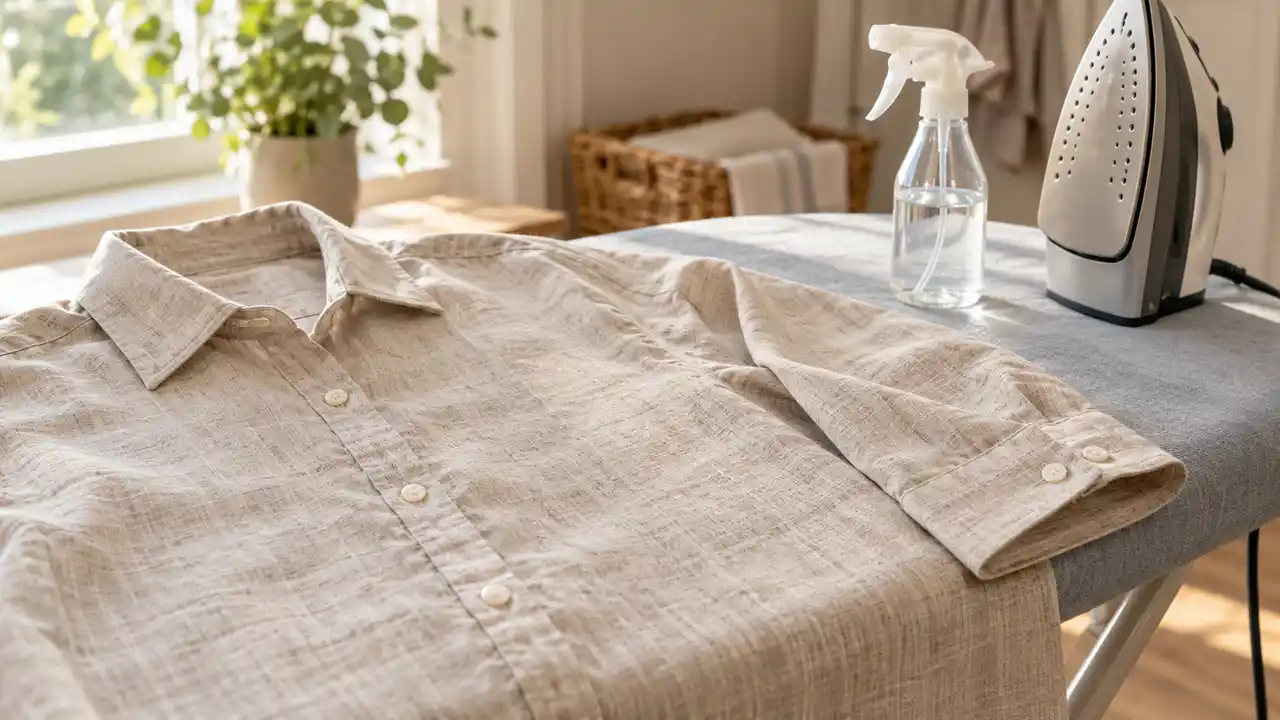
To iron linen, first check the garment’s care label, prepare a suitable pressing surface, and work on one flat section at a time using the permitted heat and moisture settings. If the instructions allow it, slightly damp fabric can be easier to smooth than deeply dried-in wrinkles. Avoid treating every linen garment as identical: blends, finishes, linings, and decoration can change what is safe.
If your present appliance is not suited to the job, our iron guide for linen clothing focuses on equipment selection. The care label and technique still determine how you should treat the garment.
Check the Garment, Not Just the Fiber Label
A linen shirt, a lined jacket, and a coated tablecloth do not necessarily share one care routine. Read the ironing instructions and check whether the item contains another fiber or a finish with a lower heat tolerance. Do not select a setting solely because the largest percentage on the composition label is linen.
Look at seams, pocket bags, buttons, prints, and any glued decoration. A method suitable for the plain outer fabric may not suit the details attached to it. If the label prohibits ironing, an extra cloth is not permission to ignore that restriction.
Prepare a Clean, Supported Surface
Use a stable board with a smooth, appropriately padded cover. A worn cover or exposed mesh can interfere with the finish. Clear enough space that a clean section will not drag across the floor while you move the rest of the garment.
Check the soleplate for residue before bringing it near light-colored fabric. Fill the iron only with water permitted by its own instructions. If you need a spray bottle to dampen fabric, use it separately; a bottle of ironing aid should never be treated as water for the appliance reservoir.
Have a hanger or another suitable drying position ready before you start. Moving a freshly pressed item into a pile can put folds straight back into it.
Work Through the Garment in Manageable Sections
- Set the permitted temperature. Use the care label and iron’s instructions together. Let the appliance reach its indicated working condition.
- Assess moisture. If damp pressing is allowed, lightly dampen a stubborn section rather than soaking the whole garment. Avoid assuming steam output alone will remove every dried crease.
- Arrange one layer smoothly. Flatten the section by hand while the iron is safely parked, keeping pockets and hidden layers out of unintended folds.
- Press or glide with control. Follow the garment’s construction without repeatedly dragging it sideways. Stop and reposition when you reach the edge of the supported area.
- Inspect before increasing treatment. Check for a trapped fold, a dry patch, or a second layer beneath the fabric before adding more heat or moisture.
- Let the area settle. Move it onto a suitable support without immediately folding or crushing it.
The appropriate sequence depends on the item. A shirt is easier to manage if small shaped areas are handled before the large body panels. A tablecloth requires repeated repositioning and somewhere clean to hold the completed section.
Handle Collars, Sleeves, and Trouser Legs Deliberately
Flatten a collar or cuff without pressing directly over buttons. If a seam is bulky, do not force the soleplate flat across the raised detail. Work around it or use an appropriate pressing aid when the garment permits.
For sleeves and trouser legs, decide whether you want a crease before pressing both layers together. Aligning the edges differently can create an unintended line. A narrow sleeve board can help you work around a tube-shaped section instead of flattening it as a double layer.
Dark fabric and visible outer panels may need a different approach to avoid shine or impressions. Follow any instruction to press from the reverse or use a suitable pressing cloth; neither measure makes an excessive setting safe.
When Wrinkles Remain
First identify whether the wrinkle is a sharp fold, a seam impression, or the natural texture of the cloth. Trying to remove every variation can lead to unnecessary repeated treatment.
If another pass is appropriate, reposition the fabric and check the permitted moisture and temperature again. More pressure or a higher setting is not the automatic next step. Stop if the surface changes appearance or the label does not support further treatment.
Can You Use a Steamer Instead?
Our linen clothes steamer guide covers appliance choices for a softer finish. A garment steamer can help relax hanging linen when its care instructions allow steaming. It does not provide the same supported pressure as an iron, so the result may be softer rather than sharply pressed. Follow the garment care label and the instructions for your own steamer when deciding which operating modes and fabric treatments are appropriate.
A wrinkle-release spray is another separate treatment. Its suitability depends on the product label and fabric, and it can leave the item needing drying time. Do not layer several methods onto an unfamiliar garment simply because the first pass did not produce a perfectly flat result.
Once the garment is smooth enough for the finish you want, hang or lay it appropriately until it is dry and cool. Linen can wrinkle again during wear; the aim is a controlled, clean finish, not a promise that the fabric will remain crease-free all day.
